Physical Address
304 North Cardinal St.
Dorchester Center, MA 02124
Physical Address
304 North Cardinal St.
Dorchester Center, MA 02124

Social networks have become a central part of daily life, which means scammers now target them aggressively. Today, Social Media Phishing is one of the fastest-growing attack vectors because people trust what they see on Instagram, Facebook, LinkedIn, TikTok and X far more than random emails. Unfortunately, attackers know this perfectly well. They exploit verification badges, fake support accounts, cloned profiles and seemingly harmless DMs to steal passwords, financial information or even entire identities. Social media scams have now become a major part of the broader phishing threat landscape.
Although these attacks may look simple at first glance, they are increasingly sophisticated. Attackers use OSINT, psychologically tailored messages and platform-specific tricks to manipulate victims. Many of these methods closely resemble the same manipulation strategies used in targeted spear phishing attacks against companies and professionals.
Social media phishing refers to scams that occur on platforms where users interact, share content and communicate. Attackers misuse features such as DMs, comments, ads and profile impersonation to trick victims into clicking malicious links, exposing sensitive data or granting account access. In many cases, attackers first collect publicly available information from profiles and online behavior before launching personalized scams.
These attacks typically appear more trustworthy than email phishing because:
As a result, scammers gain access to accounts far more easily than many realize.
Social networks offer several advantages to attackers. Additionally, constant distractions, scrolling and multitasking make users more vulnerable.
People assume major platforms filter out threats. However, scammers exploit this trust by blending into existing communities or pretending to be official support.
Billions of daily active users increase the odds that someone will respond to a phishing attempt. Therefore, attackers don’t need to be precise.
Cloning a profile takes less than a minute. Attackers copy your picture, name and bio, creating a convincing duplicate to scam your friends or followers. Public photos, visible personal details, and oversharing habits significantly increase the effectiveness of these impersonation attacks.
DMs feel informal. Because they appear friendly, victims respond quickly and emotionally.
People respond faster when a message claims:
These emotional triggers make phishing extremely effective.
Although scammers constantly evolve, several patterns repeat across all platforms. Understanding them helps you recognize threats instantly.
Attackers create accounts that look like platform support teams. They often message users claiming:
These messages include links to fake login pages resembling the real platform. Once victims enter credentials, attackers take control of the account.
Why it works:
Fear + urgency + official-looking profile picture = instant reaction.
This scam is incredibly common on Instagram, TikTok and Facebook. The attacker claims your content violates copyright laws and provides a “review link.”
Examples include:
The link leads to a phishing page requesting your login data.
Why it works:
Creators panic when they believe their account is at risk.
Everyone wants the blue checkmark. Attackers exploit this by sending messages like:
Victims enter their credentials on a fake “verification portal.”
Why it works:
It targets ego, status and aspiration.
These appear on Facebook Marketplace, Instagram Shops or even WhatsApp.
Scammers pretend to be buyers or sellers and send fake payment confirmations or phishing links to “complete the transaction.”
Examples:
Sometimes they trick victims into paying shipping costs or sending deposits.
This method is extremely direct. Attackers clone a profile and message the victim’s friends, often asking for money or sending malicious links.
For example:
When a friend sees a familiar face, they rarely question authenticity. Attackers frequently exploit publicly visible photos and personal content to make fake profiles appear more convincing.
LinkedIn is notorious for sophisticated phishing attempts that target professionals.
Examples:
These links often lead to credential harvesting pages or malicious documents. Attackers also study professional history, connections, and visible workplace activity before approaching potential victims.
These appear across all platforms, especially TikTok, X and Instagram.
Messages include:
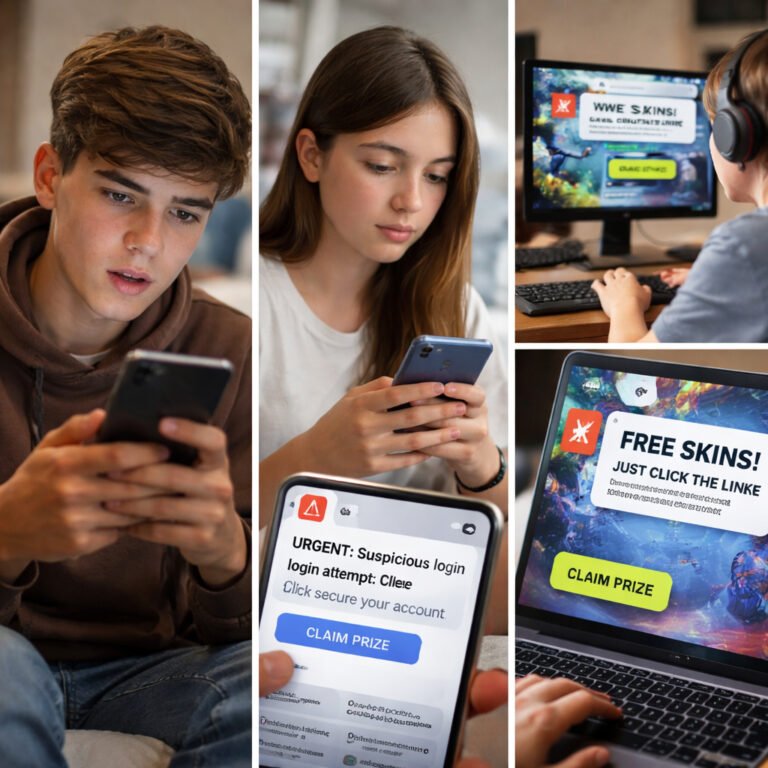
Attackers ask victims to submit private wallet keys or login details. Similar manipulation tactics are heavily used in fake giveaway scams targeting younger social media audiences.
To understand why these attacks work so consistently, we must consider human behavior. Attackers exploit several psychological weaknesses that are universal.
Scrolling creates a relaxed mindset. In that state, warnings are ignored.
Fear, urgency, excitement, validation — all these emotions bypass logic.
“Support,” “verification,” “appeal,” “reported” — these keywords provoke immediate reactions.
When scams come “from a friend,” victims are more likely to respond quickly.
People scroll fast. Because of this, they often tap links before thinking. Attackers intentionally design messages, notifications, and fake alerts to trigger automatic reactions instead of careful evaluation.
Learning to identify early warning signs is essential. Thankfully, the patterns are very consistent across all platforms.
Messages claiming:
Official teams rarely make spelling mistakes.
“24 hours to respond”
“Final notice”
“Appeal immediately”
Links with:
Legitimate platforms never contact users through DM.
TikTok, Instagram and Facebook will never ask for:
Especially from cloned profiles or new marketplace buyers.
Good security habits are far more effective than any technical tool. Here are the most practical steps. Reducing unnecessary public exposure and limiting sensitive personal information online can dramatically lower the success rate of social media phishing attacks.
Always check:
Attackers frequently exploit panic and impulsive reactions by pretending that your account is at immediate risk.
This prevents attackers from taking over your account even if they steal your password.
Check:
Private accounts and limited profile visibility can also reduce the amount of information attackers use for impersonation and targeting.
If a message triggers panic or excitement, pause.
Take a minute.
Then evaluate logically. Sharing less personal information publicly also reduces the emotional leverage attackers can use during impersonation scams.
Instagram, TikTok, Facebook and LinkedIn provide:
Enable everything. Parents should also review privacy and account safety settings for children and teenagers using social media platforms.
If a friend asks something unusual, call them. Do not rely on DM identity. Attackers often study online relationships, public interactions, and communication patterns before impersonating trusted contacts.
This is the number one rule across all platforms.
Mistakes happen. Acting quickly minimizes the damage.
Use a strong, unique password.
Check active logins and remove everything suspicious.
Immediately.
This prevents the attacker from scamming more people from your account.
Platforms remove cloned or malicious accounts quickly when reported.
Because social media dominates communication, scammers follow the crowd. They evolve quickly, use AI-generated messages and leverage the psychology of trust and urgency. Although platforms improve their security tools, no automated system can fully prevent human mistakes. Therefore, awareness is the best protection. Oversharing daily routines, travel activity, and real-time location updates also increases exposure to targeted scams and impersonation attacks.
When you learn to pause, analyze and verify before clicking, social media phishing loses its power.