Physical Address
304 North Cardinal St.
Dorchester Center, MA 02124
Physical Address
304 North Cardinal St.
Dorchester Center, MA 02124

Cybersecurity basics for kids are no longer optional — they are a modern life skill.
Children and teenagers grow up online long before they fully understand privacy, trust, or digital risks. From online games and social media to school platforms and messaging apps, young people face many everyday digital risks that are often overlooked. Understanding the most common cybersecurity risks kids and teens face daily can help families build safer online habits early.
This article explains cybersecurity basics for kids and teens in a clear, practical way — without fear, technical jargon, or exaggeration. Parents, educators, and young users will learn how digital safety works, why it matters, and how to build safe online habits early.
Cybersecurity basics for kids mean staying safe online while using devices, apps, and platforms.
In simple terms, this includes:
Cybersecurity is not about banning technology — it is about using it safely and confidently.
Everything shared online creates a digital footprint.
This includes:
What seems harmless today can:
A simple rule for kids and teens:
If you would not show it to a parent, teacher, or future employer — do not post it online.
Many online problems start with oversharing.
Even small pieces of information shared across different platforms can allow strangers to build a full profile.
Passwords are the first line of digital defense, yet they are often the weakest point.
Understanding why passwords matter is more effective than strict rules.
Phones, tablets, laptops, and gaming consoles all store personal data.
Basic device protection includes:
An unprotected device is like leaving your front door unlocked.
One of the most important cybersecurity basics for kids is learning that:
Not everyone online is who they say they are.
This applies to:
Cybersecurity teaches awareness, not fear.
The strongest protection for children online is open communication.
Parents and educators should:
Children who fear consequences often hide problems — and that increases risk.
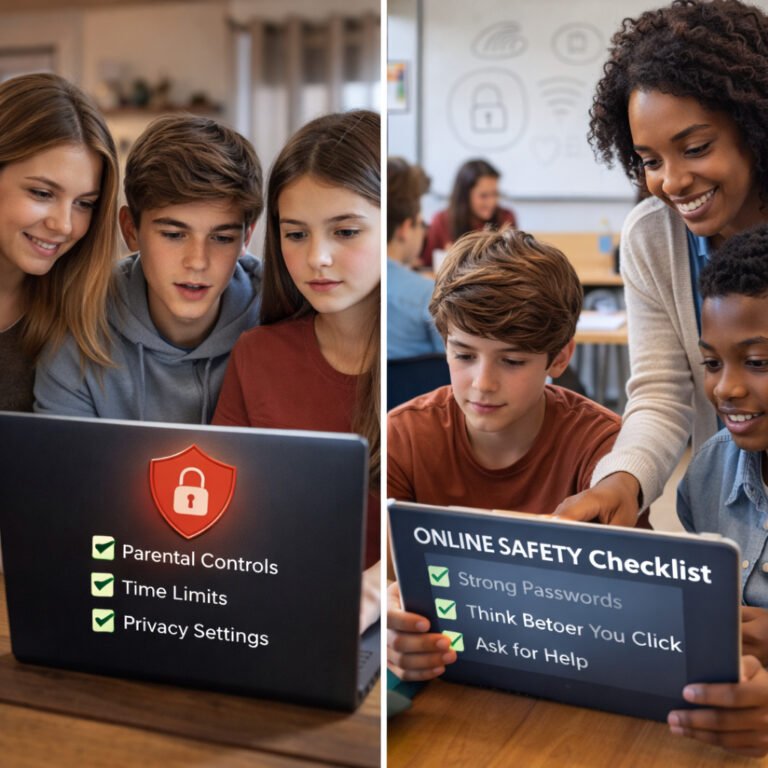
✔ Talk about online safety regularly
✔ Agree on what information can be shared
✔ Use strong, unique passwords
✔ Keep devices updated
✔ Encourage kids to report uncomfortable situations
Cybersecurity basics for kids are not a one-time lesson — they are an ongoing process.
Kids who learn cybersecurity basics early:
Cybersecurity is not about control — it is about empowering young users.