Physical Address
304 North Cardinal St.
Dorchester Center, MA 02124
Physical Address
304 North Cardinal St.
Dorchester Center, MA 02124

As deepfake technology continues to advance rapidly, deepfake identity theft has become one of the most alarming cyber threats of 2025. Criminals no longer need weeks of preparation, hacking skills, or expensive equipment to impersonate someone. Today, anyone with a smartphone and access to basic AI tools can clone a person’s face, voice, mannerisms, and online presence in less than an hour. This new reality dramatically expands the possibilities for fraud, manipulation, and social engineering — and it affects ordinary people far more often than high-profile targets.
Although identity theft has existed for decades, deepfake identity theft is drastically different. Traditional theft relied on stolen passwords, credit card numbers, or personal data. Deepfake identity theft uses your face, voice, movements, speech patterns, and digital behavior to create an artificial version of you — a version criminals control completely. Because deepfakes feel real and personal, victims, family members, employers, and banks are far more likely to trust the impersonation. That combination makes deepfake identity theft one of the most dangerous AI-driven crimes in the modern world.
Several factors have created a perfect environment for criminals to misuse deepfakes.
All these changes have transformed deepfake identity theft into mainstream cybercrime.
Most people are shocked to learn how fast and easily criminals can create a deepfake clone. Below is the real-world process used in modern attacks.
Criminals scrape:
If you’ve ever posted your face or voice online, you’re already exposed.
They upload:
The model learns:
Even non-technical users can create frighteningly accurate clones.
Criminals can now create:
Every emotion can be simulated — calm, panicked, angry, desperate.
The cloned identity is used for:
Most victims don’t realize what happened until it’s too late.
Here are the most common deepfake identity theft attacks happening right now.
Banks and crypto platforms ask for video KYC:
Deepfakes mimic all of this perfectly — allowing criminals to open accounts in your name.
Deepfake calls or voice notes convince:
…to reveal passwords, codes, or recovery links.
Criminals use your deepfake to request:
Coworkers trust what appears to be “your face” or “your voice.”
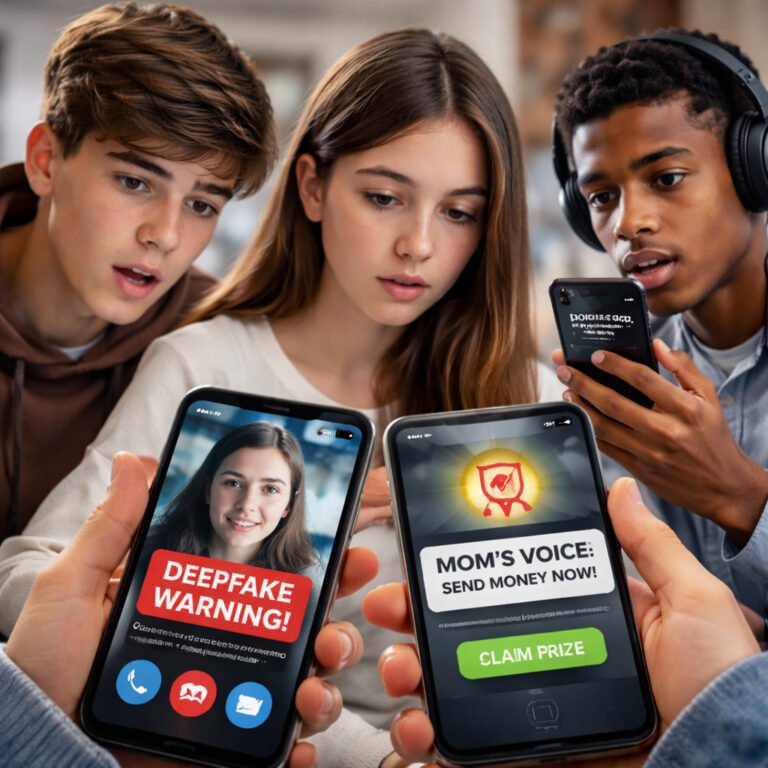
Deepfake clones say things like:
Emotional realism makes these scams extremely effective.
Criminals generate:
This can ruin reputations instantly.
Your face and voice appear on:
Victims blame you, not the scammer.
Deepfake identity theft affects families too. Criminals impersonate:
This opens the door for extremely dangerous manipulation.
Any of these can signal active deepfake identity theft.
Deepfake identity theft is not futuristic — it’s happening daily.
But when people understand how it works, pause before reacting, and verify unexpected communication, this attack becomes much harder for criminals to execute.
Knowledge is your strongest firewall.