Physical Address
304 North Cardinal St.
Dorchester Center, MA 02124
Physical Address
304 North Cardinal St.
Dorchester Center, MA 02124

The digital world is evolving fast, and one of the most concerning developments is the rise of deepfakes and children being directly or indirectly targeted by this technology. While deepfakes once focused on celebrities or political figures, 2025 has introduced a disturbing shift: children are increasingly appearing in AI-generated videos, manipulated images, voice clones, or fabricated scenarios designed to deceive, exploit, or emotionally manipulate families. Because children naturally share videos, photos, and voice clips online — often without understanding long-term risks — they have become one of the easiest targets for deepfake misuse.
Parents rarely think about deepfakes and children in the same sentence, yet criminals, scammers, bullies, and predators now use the technology to exploit minors in new ways. The combination of innocent content and powerful AI makes it easy to create fake emergencies, impersonate a child online, manipulate adults, frame children for things they never did, or generate harmful content using a child’s likeness. Since families rely heavily on digital communication, it becomes critical to understand how deepfakes put children at risk and how parents can protect them before something goes wrong.
Deepfakes affect everyone, but children face unique vulnerabilities. They spend more time online, share more content, trust easily, and lack digital skepticism. Additionally, families often post videos of kids on social media — birthdays, vacations, dance clips, voice messages, gaming streams — creating a huge library of material that AI can use.
They appear in thousands of photos and videos publicly shared online, giving AI plenty of material.
Most kids cannot distinguish a deepfake from a real video or voice message.
Families assume they are safe — until something happens.
Below are the real-world risks every modern family should understand. All of these threats already exist and are growing rapidly in 2025.
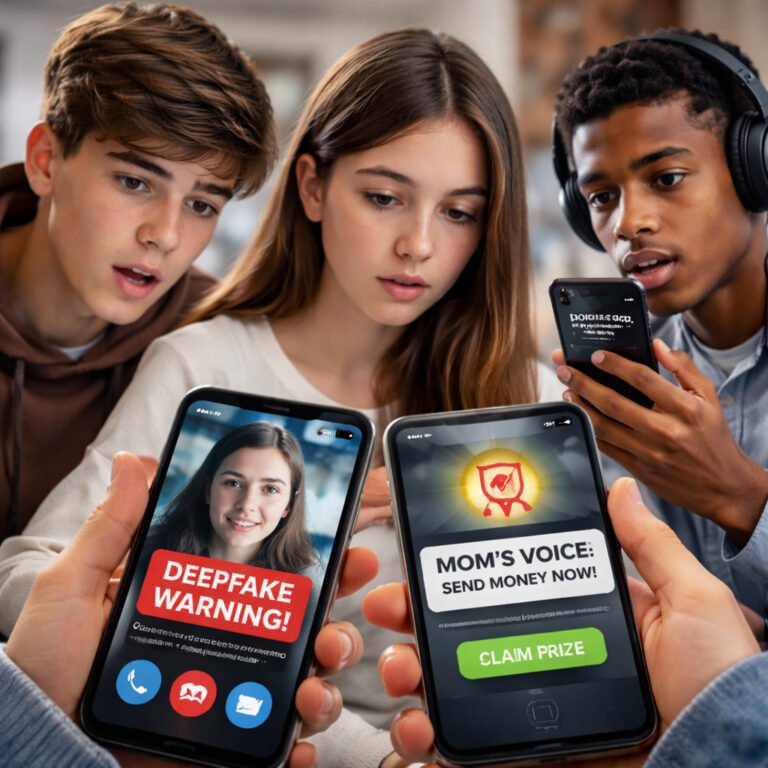
Scammers now create frighteningly realistic voice clones by scraping audio from TikTok, YouTube, gaming chats, or videos parents post online. Once they have enough material, they generate urgent messages that sound exactly like the child:
Parents panic instantly because the emotional reaction overrides rational thinking. This is one of the fastest-growing fraud techniques worldwide.
Teenagers face a particularly dangerous threat: deepfake sextortion.
Criminals take:
…and generate explicit fake images using AI.
They then threaten to send these fakes to classmates, friends, or parents unless the teen pays money or sends real photos. Although the deepfake is fabricated, the emotional trauma is extremely real. Many teens stay silent out of shame.
School bullying has become more severe with deepfakes. Students now create fake videos showing classmates:
A single realistic deepfake can destroy a student’s social life or reputation within hours.
Children are ideal targets for identity theft because they have:
Deepfake identity theft includes:
Parents often discover the issue years later.
Criminals use deepfakes to impersonate:
They send messages or video clips demanding payments, sharing false emergencies, or requesting sensitive data. Parents trust authority figures, which makes this scam highly effective.
Some criminals generate deepfake videos of children claiming to be:
These videos spread rapidly on social media, causing panic. Scammers then exploit public fear for donations or to target specific families.
Predators now impersonate:
Using deepfake voices or avatars, they establish trust faster and more convincingly. Children may unknowingly reveal private information or agree to meet in person.
Deepfakes do more than create scams — they harm children emotionally.
Children may stop trusting people around them if they’ve been manipulated by deepfakes.
Seeing themselves in fake videos can deeply disturb their sense of self.
Fear of becoming a target affects how children interact with others.
Many children hide what happened because they feel guilty or embarrassed, even though it isn’t their fault.
Here are practical, effective steps families can take immediately.
Limit full-face photos, voice clips, and public social media posts.
Simple rules like “don’t trust every video” prevent manipulation.
A secret phrase protects against emergency voice-clone scams.
Search their name, images, and usernames periodically.
Children must feel safe reporting anything suspicious.
Most platforms prioritize child-safety reports.
Avoid storing identifiable images in cloud services.
TikTok, Instagram, Roblox, Snapchat, and Discord all have different risk points.
Deepfakes are part of modern digital life, and children are among the most vulnerable targets. Protecting them requires awareness, communication, and proactive digital habits. When parents stay informed and teach kids how to navigate deception, families become far less vulnerable to manipulation.
The goal is not fear — it’s empowerment.
Children feel safest when adults understand the risks and take the lead.