Physical Address
304 North Cardinal St.
Dorchester Center, MA 02124
Physical Address
304 North Cardinal St.
Dorchester Center, MA 02124

What is OSINT?
Open-Source Intelligence (OSINT) is the structured process of legally collecting, analyzing, and interpreting publicly available data to gather intelligence. It relies entirely on free, open, and unclassified sources—such as social media, public records, search engines, and images—to evaluate security risks or conduct investigations.
The term OSINT has exploded in popularity, yet many people still misunderstand what it actually means. Because modern life takes place online, every post, photo, and comment leaves behind a trace, exposing the confidentiality of personal information without people realizing it.
When someone knows how to read these traces, they can understand surprisingly much about a person or company—without hacking anything. As a result, OSINT has become one of the most important areas in cybersecurity, journalism, digital forensics, and even personal risk management.
Although OSINT sounds highly technical, the concept is simple. Since this information is open to anyone, the real challenge is not access—it is interpretation. Even small, insignificant details can become meaningful when combined with context, sometimes leading to targeted attacks, privacy breaches, and malware infections.
This guide explains how OSINT works, why it matters, how criminals weaponize it, and how you can reduce your own exposure online.
Digital behavior creates an enormous amount of personal information. While most people assume their online presence is harmless, attackers, investigators, and analysts often see a much more detailed picture. Because OSINT transforms everyday data into intelligence, it helps reveal:
Additionally, data accumulates. Even if you delete something today, cached copies, screenshots, or archived versions may stay online for years. Consequently, OSINT analysts rarely rely on a single source. Instead, they combine hundreds of small, seemingly disconnected clues to create a broader understanding.
Many people assume OSINT is illegal or synonymous with hacking. This is a major misconception. In reality, OSINT is generally legal because of how the information is accessed.
To understand the difference between Open-Source Intelligence and hacking, imagine a house on a public street:
In short, hackers break locks to steal hidden data. OSINT analysts simply read the map you left on the table by an open window. Because OSINT only deals with data that has been voluntarily or accidentally put online, collecting it does not bypass firewalls, crack passwords, or breach systems.
Cybersecurity teams, journalists, law enforcement, and businesses use OSINT legally every single day to protect assets, conduct background checks, and find their own security vulnerabilities before criminals do.
While gathering public information is generally legal, it is not without boundaries. First, how someone uses that information can be highly illegal. Using OSINT data to stalk someone, harass them, blackmail them, or plan a physical or cyberattack is a serious crime.
Second, there are strict privacy regulations (like GDPR in Europe) that restrict how personal data can be collected, stored, and processed, even if it is technically public. Additionally, automated data harvesting (scraping) often violates the Terms of Service (ToS) of major platforms like LinkedIn and Instagram, which can lead to IP bans or legal action from the platforms themselves.
Rather than relying on hidden tools, OSINT analysts use structured methodologies and specialized search techniques to build accurate intelligence profiles. They pull data from several major public sources:
filetype:pdf or intitle:"index of" to locate sensitive files left indexable on public servers.Many small and medium-sized businesses (SMBs) operate under the myth that they are “too small to be targeted.” In reality, cybercriminals use corporate OSINT to map a company’s entire infrastructure and vulnerability surface before sending a single email or launching malware.
Corporate OSINT exposes critical business assets that owners often forget are public:
test.yourcompany.com) that are no longer monitored but remain indexed online.For a business, a simple corporate OSINT audit can reveal exactly what an attacker sees, allowing IT teams to close open windows before they are exploited.
Social networks are the ultimate playground for OSINT because they encourage voluntary oversharing. While most people see their profiles as disconnected apps, cybercriminals view them as pieces of a larger puzzle.
When these pieces combine, they create a complete, highly accurate profile that makes you a predictable target:
Images are one of the richest OSINT sources because they hold far more information than text. Before anything is analyzed, the image itself reveals people, objects, locations, shadows, reflections, and surroundings. When analysts zoom into small details, they often uncover clues the owner never noticed.
AI-powered image recognition can now identify landmarks, objects, logos, and even room layouts from seemingly ordinary photos. When consecutive photos are analyzed over weeks, months, or years, the patterns become extremely reliable. Attackers can compare wall textures against real estate listings, analyze sun positions to determine the time of day, and match background details to map your lifestyle.
Cybercriminals prefer OSINT because it is silent, safe, and extremely cost-effective. They avoid hacking attempts until the last possible moment, since public data already tells them most of what they need to know.
Here is how criminals weaponize public data in the real world:
Using OSINT, attackers craft emails that look shockingly credible. If an attacker knows your boss’s name, a real project you posted about on LinkedIn, or an invoice from a vendor you actually use, they can create a message that feels legitimate. Victims click because the context is familiar and psychologically comfortable.
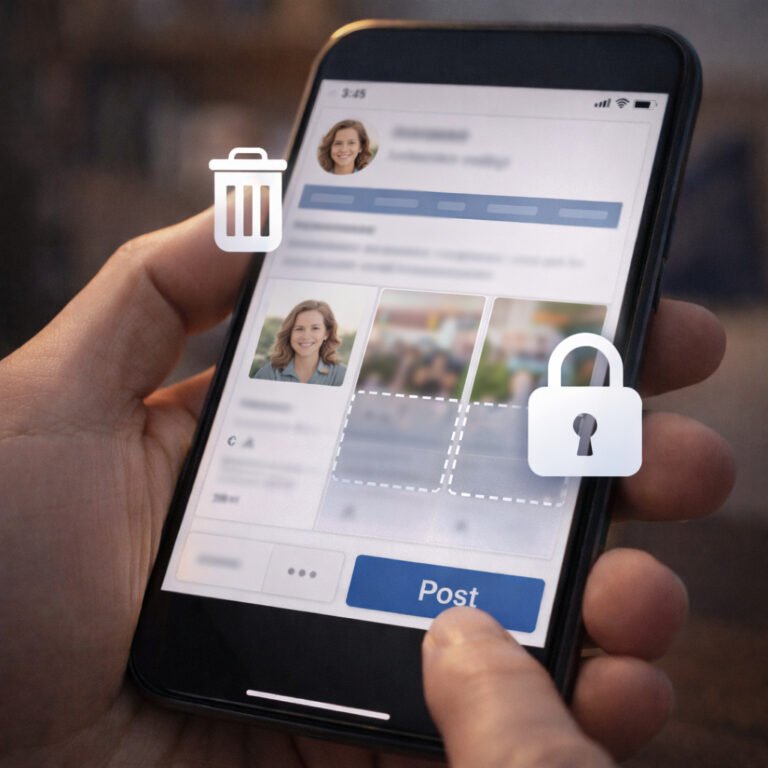
One of the most overlooked risks is emotional exposure. Some scammers specifically search for people who post about loneliness, divorce, breakups, or financial stress. Because emotional vulnerability is a powerful psychological entry point, criminals collect friendly, approachable, or professional-looking photos of other people to build believable fake personas and slowly manipulate vulnerable victims for months before requesting money or cryptocurrency.
Scammers copy public photos, profile pictures, names, and bios to create fake profiles that look identical to yours. They use these accounts to message your friends, request emergency money, promote fake giveaways, or send malicious phishing links. With modern AI tools, criminals also use your photos and voices to create deepfake videos and identity cloning schemes.
Posting holiday photos in real-time tells criminals exactly when you are away from home. By combining real-time stories with previous photos showing your neighborhood, apartment entrance, window views, or street signs, criminals can easily plan and coordinate physical burglaries.
If you discover that someone has cloned your photos or is running a fake profile pretending to be you, you must act quickly:
Reducing your exposure does not mean deleting every account or disappearing from the internet. Instead, focus on building practical habits to control what you reveal.
If you want to test how visible your life is from a criminal’s perspective, take ten minutes today to perform this quick profile audit:
If you find anything that makes you uncomfortable, remove or untag it immediately.
Open-Source Intelligence (OSINT) is the practice of legally collecting, analyzing, and structuring publicly available data to evaluate security risks, conduct investigations, or map attack surfaces.
Yes. OSINT relies entirely on information that has been voluntarily or accidentally made public. However, while gathering public data is legal, using it for illegal acts like stalking, blackmail, or cyberattacks is a crime.
No. Google Dorking simply uses advanced search operators to filter public search results. It is a standard tool for IT security. However, accessing private files that were accidentally exposed can cross legal lines depending on local laws.
Popular OSINT tools include Maltego (data mapping), Shodan (internet-connected devices), the Wayback Machine (archived web pages), and reverse-image search engines.
Yes. Attackers use OSINT to quietly profile targets, identify relationships, map company systems, and find personal vulnerabilities to plan highly convincing spear-phishing or social engineering scams.
Businesses perform OSINT (often called passive reconnaissance) to scan their own systems, employees’ public profiles, and subdomains to find and patch accidental data leaks before hackers do.
You cannot delete your entire digital footprint, but you can significantly reduce it by adjusting social media privacy settings, removing old accounts, opting out of data broker sites, and avoiding posting real-time location details.
OSINT is a powerful form of intelligence that relies entirely on public data. Because we publish so much of our lives online, cybercriminals use our posts, photos, comments, and routines to build detailed behavioral profiles long before launching an attack.
Fortunately, understanding how OSINT works is your strongest defense. When you know what others can see, you regain control over your digital footprint. By making small, intentional adjustments to your sharing habits, you can protect your privacy and security without abandoning the digital world.