Physical Address
304 North Cardinal St.
Dorchester Center, MA 02124
Physical Address
304 North Cardinal St.
Dorchester Center, MA 02124

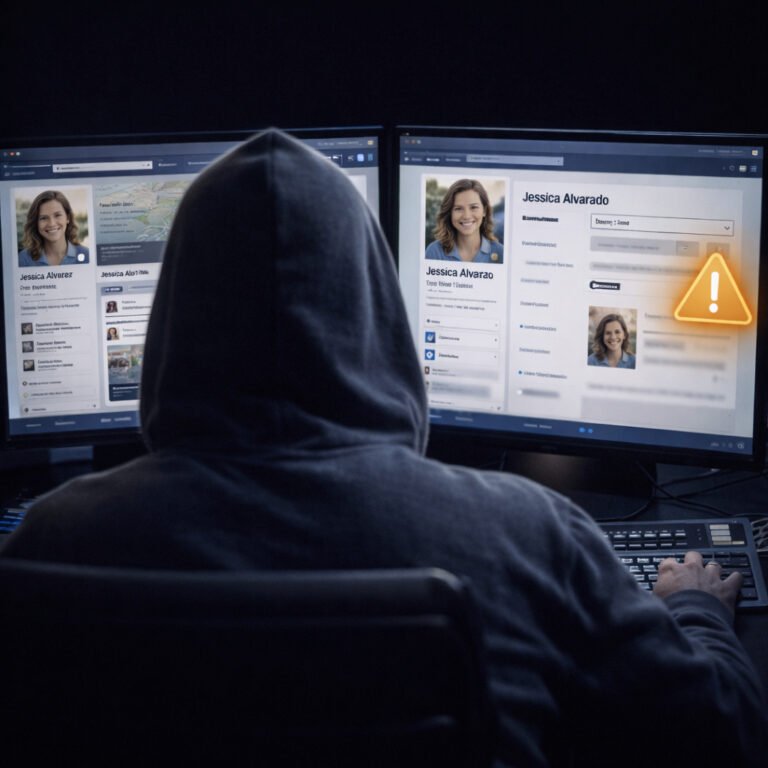
Why posting in real time is risky is not a paranoia topic — it’s one of the most practical online safety habits you can learn. The moment a Story, check-in, or “right now” post goes live, it may reveal your location, your routine, and even the fact that your home is empty. Because timing is data, real-time posting affects both personal safety and online privacy.
In this guide, you’ll learn what real-time posting actually exposes, why it matters in everyday life, and how to share your moments without turning social media into a live tracking signal.
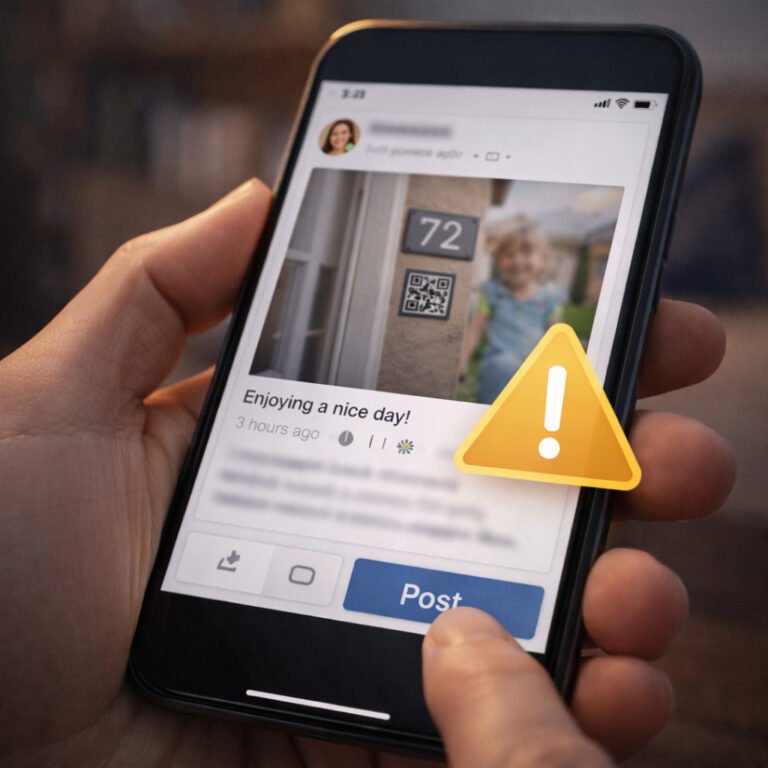
Many people assume the danger comes from geotags. However, the bigger issue is context.
Even without a location sticker, a post can reveal:
As a result, someone can narrow down your location surprisingly fast. This is a classic OSINT digital footprint problem: small details build a bigger picture.
Posting in real time means content is uploaded while you are still:
In practice, it happens most often through:
Even if the content looks harmless, the timing can be enough to create risk.
This is the most obvious risk, yet it’s also the most ignored.
When someone posts:
they indirectly broadcast:
“I am not home right now.”
Of course, many people respond with:
Still, homes are not usually robbed by hackers. Instead, they are robbed by opportunists. Unfortunately, opportunists love information — and real-time posts provide it.
Stalking and harassment are not only celebrity problems. In fact, real-time posting can make things easier for anyone with unhealthy intentions.
The reason is simple: it answers two key questions.
This becomes especially risky when real-time posts show that you are:
Even if the chance of something happening feels small, the consequences can be serious.
Your routine is one of the most valuable things a criminal can learn. Not because it’s interesting, but because it’s predictable.
For example, a profile that repeatedly shows:
can become a schedule.
Most people never write, “I go here every Tuesday.” Nevertheless, their content says it for them.
Instagram Stories disappear after 24 hours. That’s why they feel safe.
In reality, Stories can be:
Meanwhile, Stories are usually posted with less thought than a normal feed post. Because of that, they are one of the biggest sources of accidental oversharing.
A person posts a balcony Story, and a hotel logo appears in the corner. As a result, strangers can identify:
Even if nothing happens, the risk was unnecessary.
Someone posts gym selfies every Monday and Thursday evening. Over time, the pattern becomes obvious. Consequently, it becomes easy to predict where they will be.
This is one of the most common real-world privacy failures on social media.
A cozy evening Story might include:
Together, these details can reveal whether someone is alone and where they live.
This is where social media oversharing connects directly to phishing and social engineering.
If scammers know you are traveling, they can send more believable messages, such as:
Because the timing matches your real life, the scam suddenly feels realistic. That is exactly why posting in real time is risky not only for privacy, but also for cybersecurity.
Deleting your accounts is not the solution. Instead, the goal is to reduce risk while keeping your life shareable.
In practice, two habits matter most:
This is the realistic version of online privacy.
Even a 12–24 hour delay dramatically reduces risk. More importantly, you lose nothing — the photo still looks the same.
Travel content is often the most dangerous real-time habit. Therefore, it’s safer to share:
only after the trip.
If a tag feels important, tag the city instead.
For example:
This keeps the vibe while removing precision.
Routine places include:
Even if the content is innocent, repeated patterns create risk over time.
Close Friends can help. However, it only works if the list is truly small.
If 60–80 people are included, it’s not close anymore. Instead, treat it as a security layer: trusted people only, reviewed regularly.
If your content helps someone answer:
“Where is this person right now?”
delay it.
That one habit is modern privacy.
Why posting in real time is risky comes down to one idea: timing is data.
It can reveal:
If you want to reduce your digital footprint without deleting social media, this is one of the strongest habits you can adopt.
For the next 14 days, stop posting in real time.
Post later.
Then notice how quickly your profile becomes safer — without losing your ability to share your life.