Physical Address
304 North Cardinal St.
Dorchester Center, MA 02124
Physical Address
304 North Cardinal St.
Dorchester Center, MA 02124

This category explores phishing and social engineering attacks that target human behavior rather than technology. It covers common phishing techniques, real-world scams, manipulation tactics, and practical ways to recognize and avoid them.
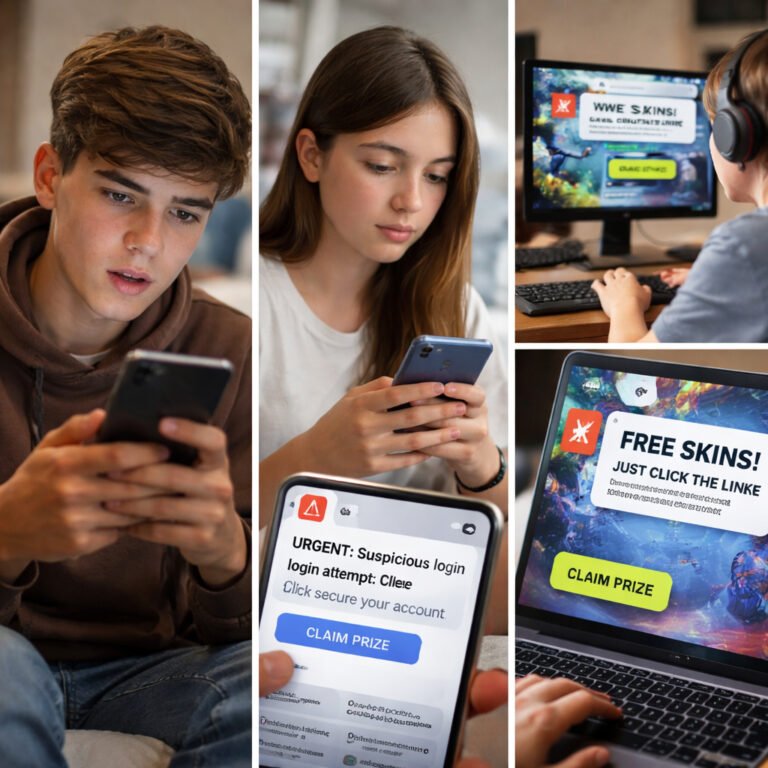
Why Scams Target Kids and Teens Online scams for kids and teens rarely look like “crime.”They look like messages, rewards, friendly chats, and opportunities that feel exciting, urgent, or exclusive. Children and teenagers are not targeted because they are careless.…

As digital payments, contactless menus and quick login links become part of daily life, QR codes are now everywhere — on café tables, posters, delivery lockers, parking meters and even workplace printers. Because they are fast, convenient and effortless, people…

Social networks have become a central part of daily life, which means scammers now target them aggressively. Today, Social Media Phishing is one of the fastest-growing attack vectors because people trust what they see on Instagram, Facebook, LinkedIn, TikTok and…

As more people rely on smartphones for banking, shopping and daily communication, Smishing and Vishing Threats have become some of the most dangerous forms of social engineering. Attackers understand that mobile users react quickly, often without analyzing the details of…

Business Email Compromise is one of the most financially damaging cyberattacks in the world, and it continues to grow because it exploits the most dangerous vulnerability in every company: human trust. Unlike malware-heavy attacks, BEC doesn’t rely on technical exploits.…

Spear Phishing and Whaling have rapidly become two of the most dangerous cyber threats facing modern companies. Unlike generic phishing emails blasted to thousands of random victims, these attacks are highly customized, data-driven, and designed to feel completely legitimate. Because…

Email phishing is one of the oldest and most frequently used cyber attack methods, and it continues to succeed because people rely heavily on email for both personal and professional communication. Although many users believe they can easily recognise suspicious…

Phishing remains one of the most widespread cyber threats, and it continues to succeed because it targets human behaviour rather than technology. Although security tools have improved over the years, phishing still works because attackers exploit emotions like urgency, fear,…

Impersonation scams have become one of the fastest-growing online threats, and many families are urgently searching for practical ways to protect older adults from impersonation scams. Because criminals now use advanced tools such as AI voice cloning, caller ID spoofing…

What Are Dark Patterns (and Why You Should Care) Dark patterns are deliberate design choices in websites and apps that manipulate people into taking actions they might not otherwise take. Whether it’s sneaky wording, confusing buttons, or hidden opt-outs, dark…