Physical Address
304 North Cardinal St.
Dorchester Center, MA 02124
Physical Address
304 North Cardinal St.
Dorchester Center, MA 02124

When exploring data integrity in cybersecurity, it helps to imagine checking your business bank account and seeing that a zero has been wiped off your balance. Or worse, imagine a customer shipping address changing in your system right before you send out a high-value order. In both cases, no data was stolen, and your systems stayed online. Yet, your business is facing a crisis.
This is because your data lost its trustworthiness. In the digital world, keeping secrets is only half the battle. The other half is ensuring your information tells the truth. For small businesses and everyday users, integrity is the silent bodyguard that guarantees your files, financial records, and customer details remain accurate, complete, and completely unaltered.
This is because your data lost its trustworthiness. In the digital world, keeping secrets is only half the battle, and making sure your systems remain online and available is another. The final piece of the puzzle is ensuring your information tells the truth.
Many people focus so much on preventing data leaks that they forget to protect the accuracy of the data itself. While confidentiality is about keeping unauthorized eyes out, data integrity is about preventing unauthorized changes.
Maintaining data integrity means ensuring that information remains exactly as it was created during storage, processing, and transmission. It means that if you write a digital document or save a customer record today, it will look exactly the same tomorrow, unless an authorized person intentionally and correctly updates it.
In the modern digital workspace, integrity relies on three fundamental requirements:
Without these checkpoints, you cannot trust the metrics on your dashboard, the invoices you send to clients, or the backups you rely on to recover from disasters.
When data changes unexpectedly, it usually happens in one of two ways: through accidental human mistakes or through deliberate, malicious tampering.
Most integrity failures are not caused by cybercriminals, but by simple daily mishaps.
These accidents might seem minor, but they create a dangerous domino effect. If your team starts making business decisions based on corrupted or incorrect data, the financial losses can add up quickly.
The most dangerous hackers do not always steal your files or lock your screens with ransomware. Instead, they slip into your network quietly and subtly alter small pieces of information. This is known as a silent data manipulation attack.
REAL-WORLD RISK: An attacker gains access to a small business’s email account. Instead of locking the owner out, they monitor the conversation until an invoice is about to be sent to a major client. The attacker opens the PDF invoice, changes the bank account number to their own, and lets the email go through.
The data looks technically valid, the client pays on time, but the money lands straight in the criminal’s wallet. The business only realizes they have been targeted weeks later when tracking down the “unpaid” invoice. This is a classic breach of data integrity, and it happens to hundreds of small businesses every single year.
You do not need an expensive IT team or complex software to maintain this protection. You can build a highly resilient shield using tools and features that are likely already built into your current software.
To ensure your business data remains trustworthy and accurate, start with these three basic operational habits:
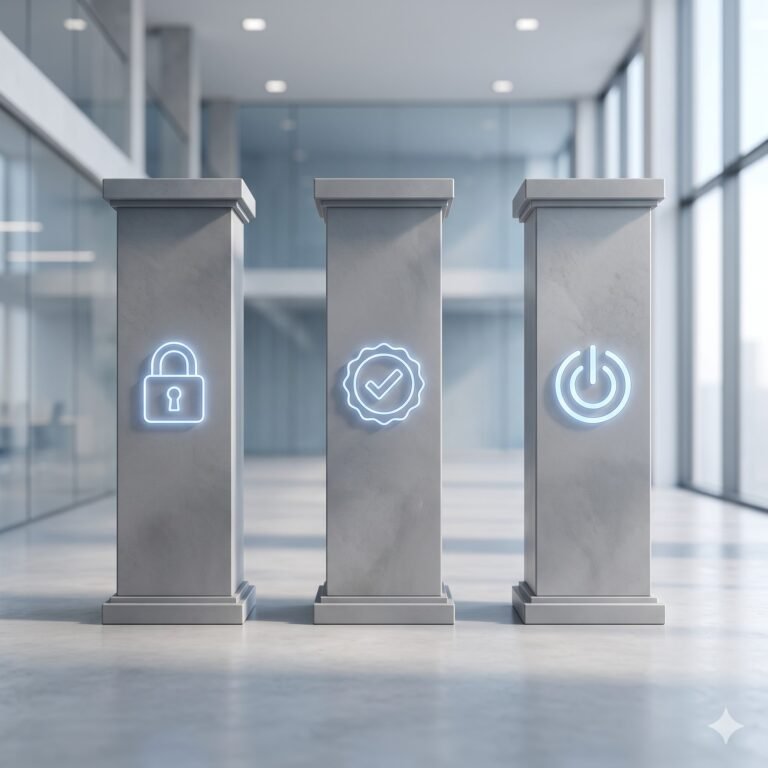
Data integrity is one of the three pillars of the CIA triad and serves as the foundation for protecting sensitive information in every modern organization. If you cannot trust your data, you cannot trust your business operations.
Securing your network is not just about keeping intruders away from your secrets; it is about ensuring that the systems you rely on every day are providing you with accurate, reliable information. By setting up automated logs, utilizing version history, and standardizing how your team handles files, you protect the core accuracy of your business. In cybersecurity, accuracy builds trust, and trust is your most valuable asset.