Physical Address
304 North Cardinal St.
Dorchester Center, MA 02124
Physical Address
304 North Cardinal St.
Dorchester Center, MA 02124

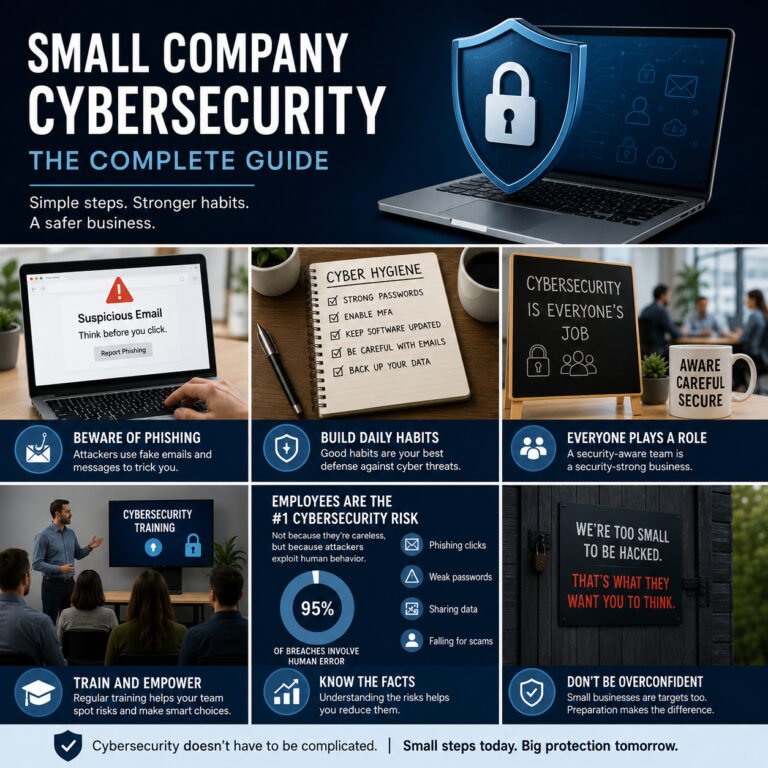
Employee cyber risk is one of the biggest challenges in modern security. Most companies focus on tools, systems, and software. However, real incidents often start with human behavior.
This does not happen because employees are careless. Instead, it happens because people work under pressure, handle multiple tasks, and make fast decisions throughout the day.
In these conditions, security becomes secondary.
As a result, even small human mistakes can turn into serious cybersecurity incidents.
One of the most dangerous assumptions is that only inexperienced users fall for cyber attacks. Many companies believe that awareness comes naturally with experience.
However, this is not true.
Even experienced employees:
Because of this, employee cyber risk does not depend on intelligence. It depends on situation and timing.
Most cyber incidents happen during busy moments, not calm ones.
For example:
In these situations, employees prioritize speed.
They:
This behavior is normal. However, attackers rely on it.
They design attacks that feel urgent and require fast decisions by exploiting human psychology, trust, and emotional reactions.
Phishing is effective because it blends into everyday work.
For example:
Nothing looks suspicious at first glance.
Because of this, employees often fail to recognize phishing emails and do not treat these messages as threats. They treat them as part of their daily tasks.
Employee cyber risk increases when normal communication becomes a channel for attack.
People trust what they recognize.
If a message looks familiar, employees rarely question it. They assume it is safe because:
However, attackers often copy real conversations. They use stolen email threads, known names, and realistic language.
Because of this, familiarity becomes a hidden vulnerability.
Most cyber incidents start with a single action:
These actions take seconds. However, the consequences can affect the entire company.
For example:
Employee cyber risk grows when small actions are treated as harmless.
Many companies invest in tools such as antivirus, firewalls, and monitoring systems. These tools are important, but they do not solve human behavior.
Tools cannot stop:
Only awareness can address these risks.
When employees understand how attacks work, they:
This change reduces the likelihood of incidents.
Reducing employee cyber risk does not require complex solutions. Instead, it requires consistency.
Simple practices include:
These habits create a strong first line of defense.
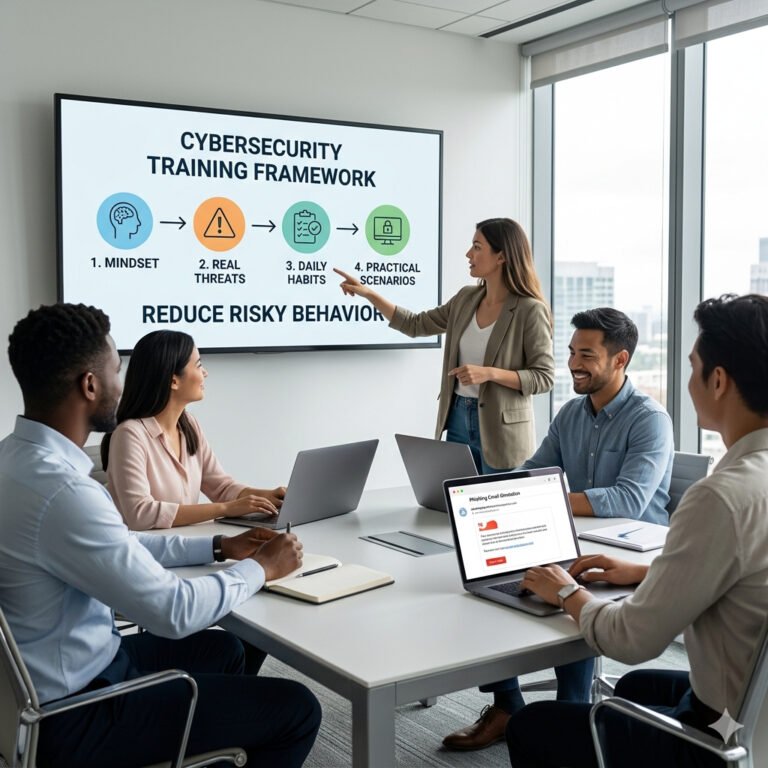
Without training, employees rely on intuition. With structured cybersecurity training, they recognize patterns much faster.
Even a short cybersecurity awareness session can:
Employee cyber risk decreases when employees understand not only what to do, but why it matters.
The goal is not to make employees paranoid. The goal is to make them aware.
Instead of reacting automatically, employees learn to pause and think:
This small shift in mindset creates a significant improvement in security.
Cybersecurity is not only about technology. It is about behavior.
If employees:
then many attacks fail before they begin.
This is why employee cyber risk must be treated as a core business issue, not just an IT problem within broader small business cybersecurity.