Physical Address
304 North Cardinal St.
Dorchester Center, MA 02124
Physical Address
304 North Cardinal St.
Dorchester Center, MA 02124

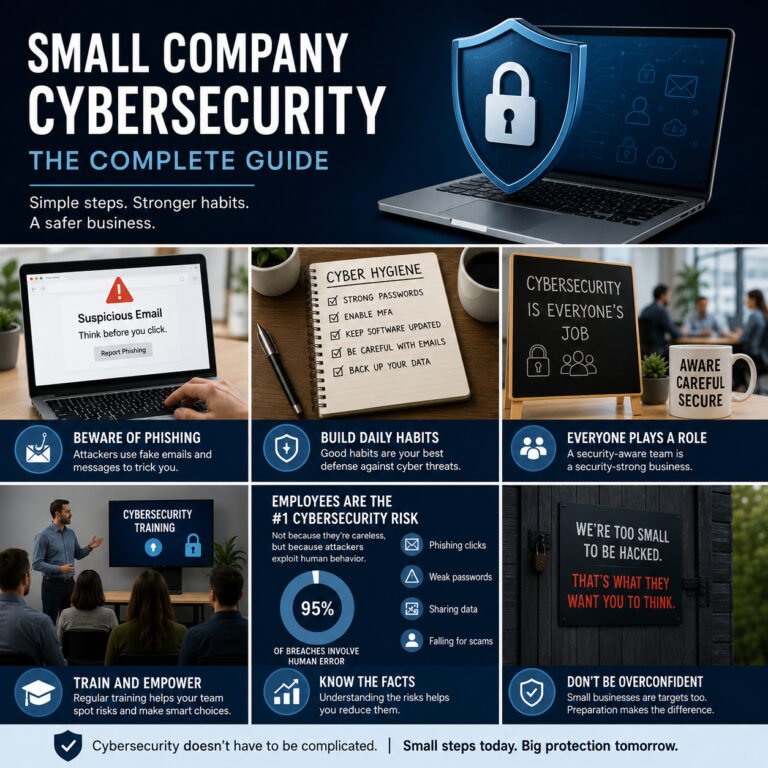
Small business cybersecurity is often ignored because it feels unnecessary. Many companies believe they are too small to be hacked, too unimportant, or simply not visible enough.
However, this belief creates risk from the very beginning.
In reality, attackers do not look for important companies. Instead, they look for easy ones. As a result, small businesses become ideal targets because they often lack structure, awareness, and basic protection.
The idea that “we’re too small to be hacked” sounds logical at first. After all, many small companies do not store highly sensitive data or large amounts of money.
However, this assumption creates vulnerability.
When small business cybersecurity is not taken seriously, employees start ignoring basic habits. They reuse passwords, skip updates, and trust emails too quickly. Over time, these small mistakes create real exposure.
Most cyber attacks do not break systems. Instead, they exploit human behavior.
Large companies invest in structured security processes. In contrast, small businesses often rely on one IT person or external support.
Moreover, that support usually focuses on keeping systems running, not securing them.
Because of this, many companies:
As a result, attackers see small businesses as low-effort targets.
Many companies think they have nothing worth stealing, even though attackers often target sensitive information and the confidentiality of business data. However, attackers are not always looking for valuable data.
Instead, they look for access and control, especially in smaller companies with weak protection and limited internal security awareness.
In many incidents, attackers aim to:
In other words, they do not need millions. They need leverage.
You do not need to be rich to be attacked. Instead, you only need to depend on your systems.
So ask yourself:
If the answer is no, then you already have something valuable — systems and access that depend on the availability of critical services.
This is exactly why ransomware works so well.
Ransomware does not care about your size. Instead, it focuses on dependence.
Typically, the attack starts small:
After that, attackers demand payment.
For a small business, even a few hundred euros can feel cheaper than downtime. Therefore, many companies choose to pay.
Technology is not the weakest link. Instead, people are often the biggest cybersecurity vulnerability inside small businesses.
Even experienced employees make mistakes. For example:
Because of this, most incidents start with common phishing and social engineering tactics such as:
These are not technical failures. They are human ones.
The good news is simple. Small business cybersecurity does not require complex tools. Instead, it requires consistent habits.
For example:
Although these steps seem basic, they are part of the daily cyber hygiene habits that prevent a large percentage of attacks.
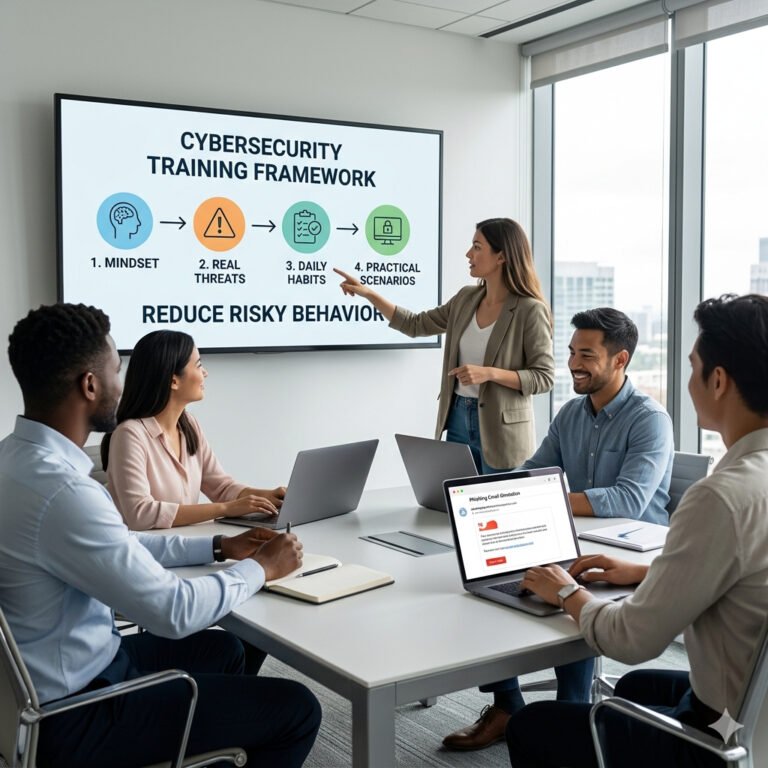
Many companies invest in tools but ignore training. However, this creates a serious gap.
Even one hour of cybersecurity awareness training can:
When employees understand real risks and follow a structured cybersecurity awareness framework, security improves naturally.
Cyber attacks are no longer rare events. Instead, they are part of everyday business risk.
So the real question is not:
“Are we important enough to be hacked?”
Instead, ask:
“Are we prepared if it happens?”
In many cases, the answer is no.
You do not need a large budget to improve small business cybersecurity, but you do need a broader understanding of how modern cyber risks affect smaller companies.
Start with:
Step by step, these changes create real protection.
You are not too small to be hacked.
You are only too small to ignore it.